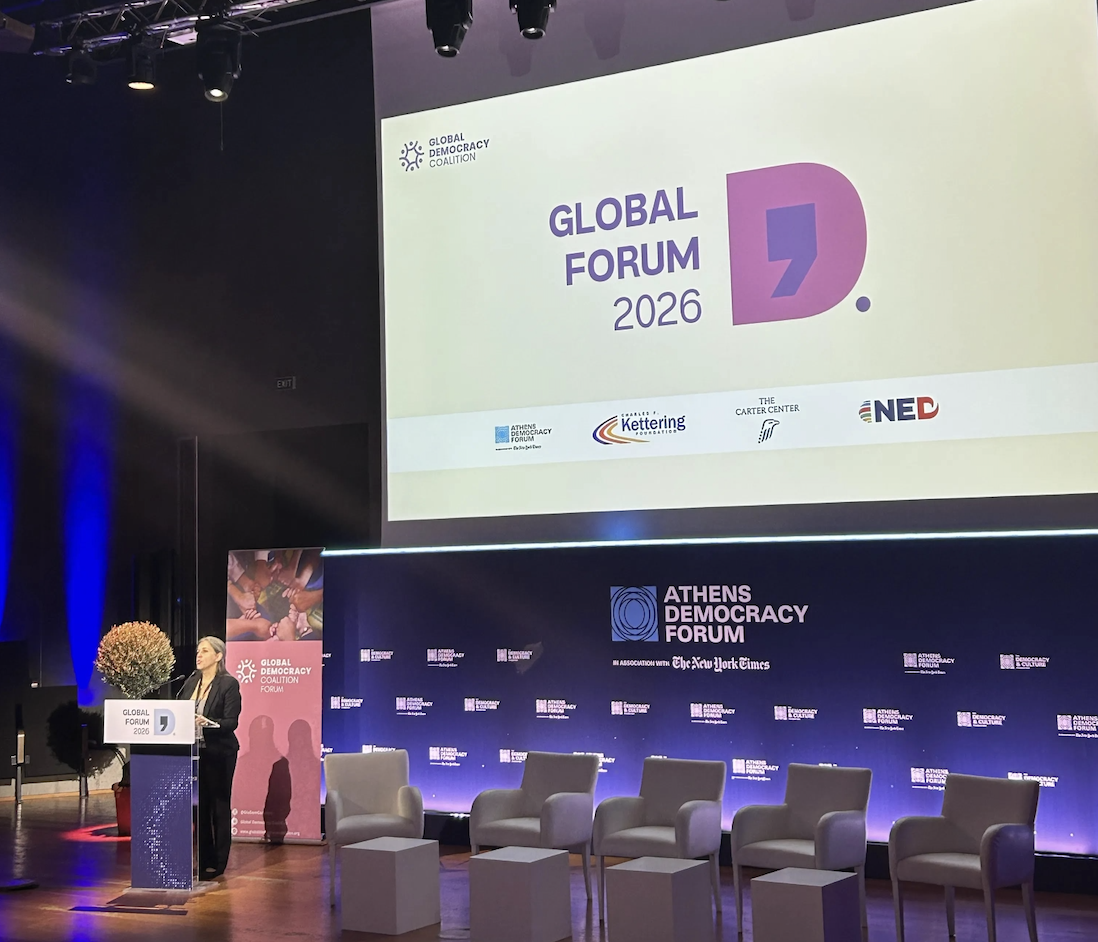
Representing United Cities and Local Governments (UCLG), the Observatory for Participatory Democracy (OIDP) participated in the Global Democracy Coalition (GDC) Global Forum 2026, held on 1 October at the Athens Conservatoire Amphitheater, in collaboration with the Athens Democracy Forum. The GDC is an initiative convened by the International Institute for Democracy and Electoral Assistance (International IDEA), bringing together more than 190 democracy organisations and partners from around the world to foster collaboration and collective action.
Held under the theme “Democracy and Trust: From Diagnosis to Collective Action,” the Forum marked the culmination of a year-long process of regional dialogues in Africa, the Americas, Europe, and Asia. The Regional Forums in Nairobi, Asunción, Prague, and Seoul explored democratic challenges and innovations from their respective contexts, while identifying a shared concern: democratic participation is expanding, but trust in democratic institutions is not keeping pace.
Rather than following a traditional conference format, the event was structured as a day of analysis, exchange, deep listening, and collective decision-making, centred on one overarching question: why does democratic participation keep growing while democratic trust keeps declining, and what would it take for the two to reinforce one another?
In his keynote speech, Pita Limjaroenrat, Senior Democracy Fellow at the Harvard Kennedy School, addressed the current challenges facing democracy under the question of “democracy versus competitive autocracy.” He stressed the importance of restoring trust in democratic institutions and delivering results that respond to people’s concerns as essential to strengthening democracy.
The Forum was organised around four thematic frames: Trust and Algocracy, Trust and Participation, Trust and Delivery, and Trust and Resilience. Each group connected the findings of the regional forums with academic research and practical experience, examining how democratic trust can be rebuilt across different contexts.
Trust and Participation
OIDP, represented by Adrià Duarte and Julia Guimarães, contributed to the workshop dedicated to “Trust and Participation”. Silvia Cervellini, member of the Advisory Committee of OIDP and Co-Founder and Director of Delibera Brasil also took part in the Forum. The frame was introduced by Olga Caballero, Executive Director of Alma Cívica, who stressed the need to turn participation into power and influence. Although civic energy and willingness to participate remain strong, the translation of this energy into concrete influence and institutional power is often failing.
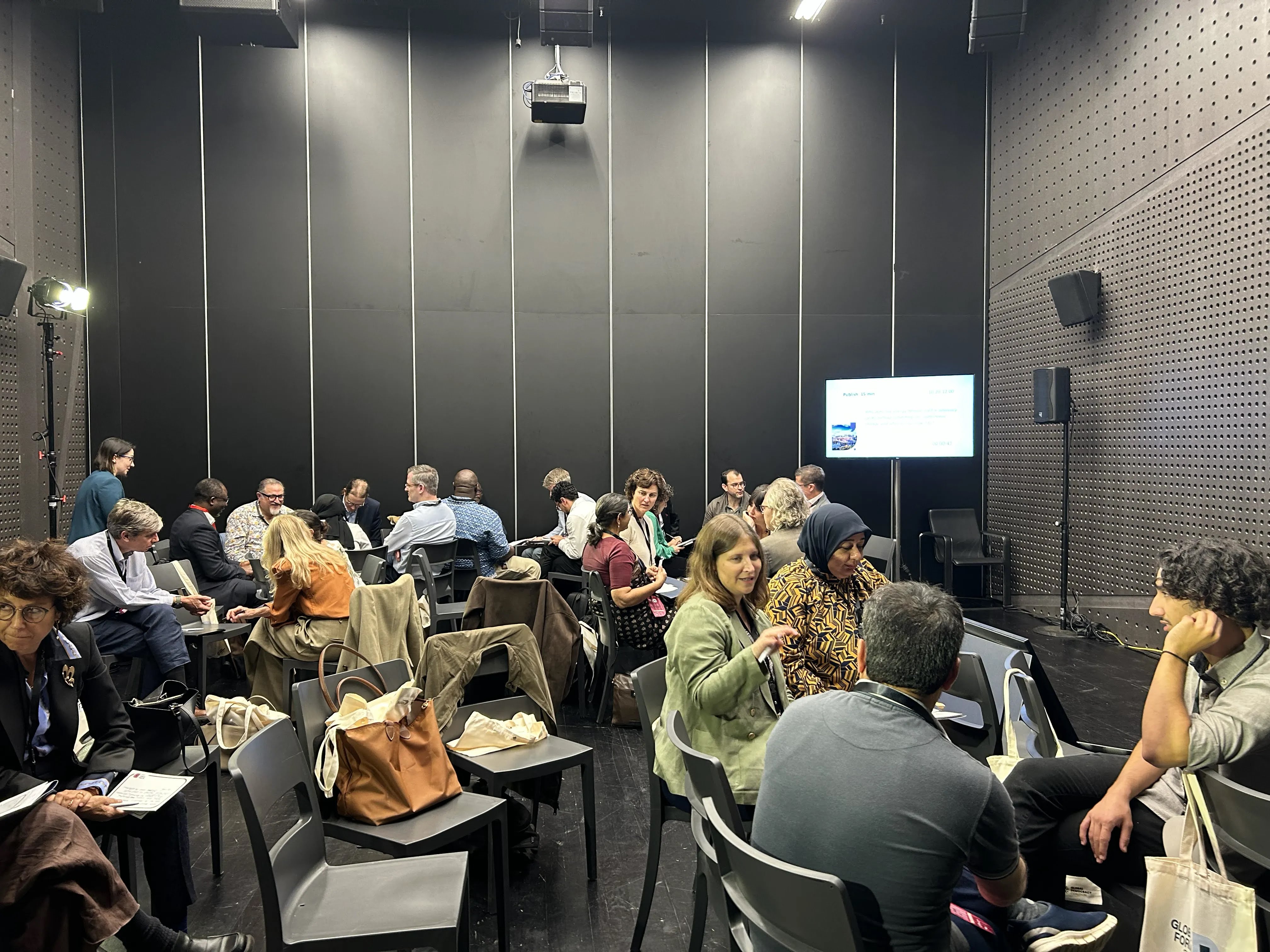
The workshop examined why civic energy so frequently becomes trapped in advocacy cycles without producing lasting institutional change. It highlighted that participation, while essential to democracy, does not automatically rebuild public trust. Citizens are more likely to trust democratic institutions when they can see a credible connection between expressing their views and institutions listening, responding, and acting.
The discussion identified several barriers to this connection:
The perceived gap between participating and achieving concrete results.
The lack of accountability for how participatory outcomes are considered and implemented.
The discontinuity of participatory processes, which are often sporadic, symbolic, or disconnected from decision-making.
The need for systemic and cultural change, supported by civic education and new democratic narratives.
The difficulty of ensuring that participation leads to influence rather than simply consultation.
The workshop therefore emphasised that the challenge is not only to create more opportunities for people to participate, but to ensure that participation becomes meaningful, consequential, and connected to institutional decision-making.
The afternoon Deep Listening Session invited participants to reflect on the conditions that enable citizen participation to produce institutional change. The session began with the case study of Guatemala’s #RenunciaYa movement and continued through a fishbowl conversation, allowing participants to explore how civic action can become connected to institutions capable of absorbing public demands and translating them into reform.
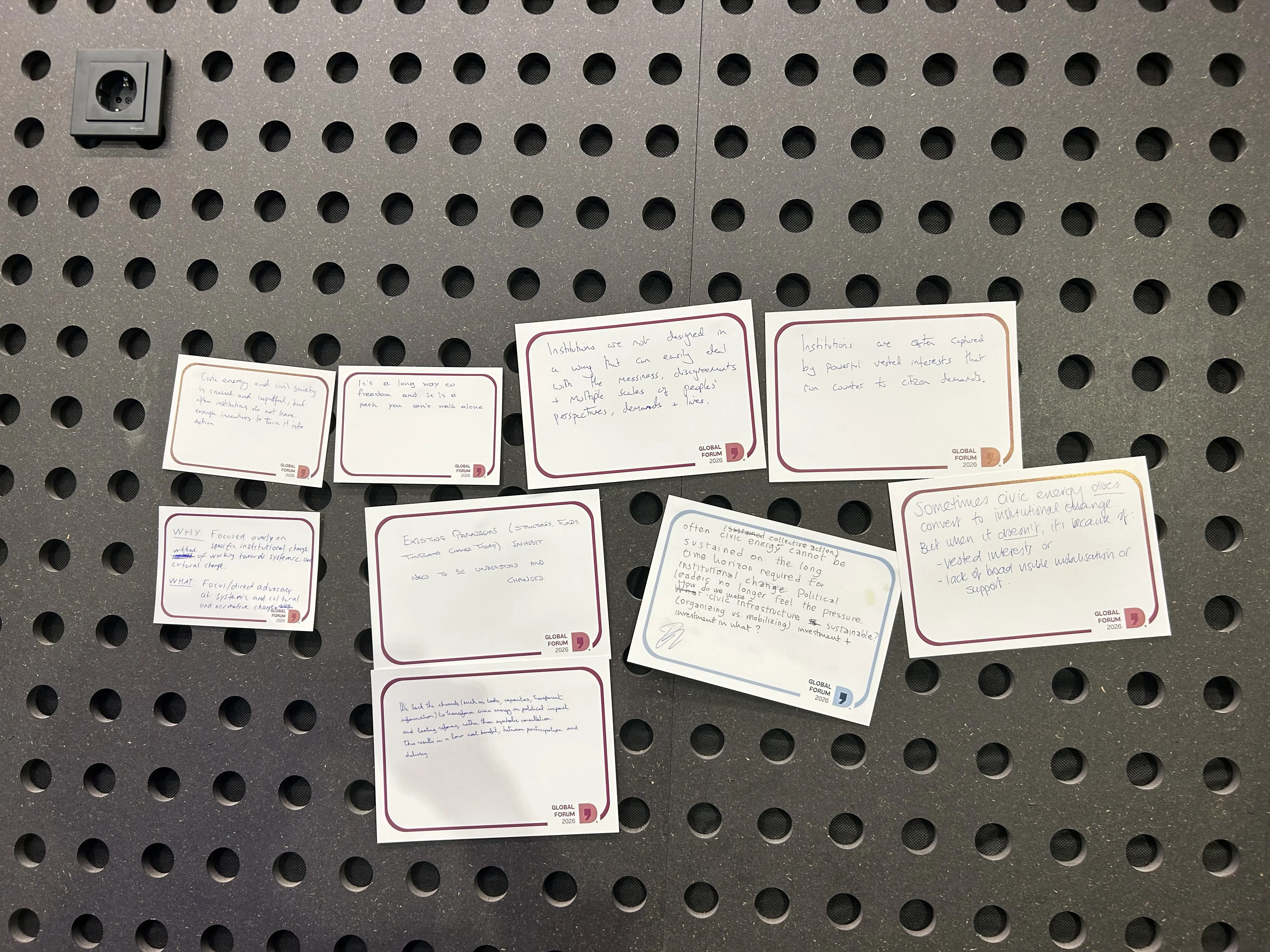
The Guatemala case demonstrated both the potential and limitations of civic mobilisation. Social media helped transform public outrage into sustained mass action, contributing to the resignation and prosecution of President Otto Pérez Molina. However, the absence of sufficiently resilient institutions and civic structures made it difficult to consolidate these gains into lasting democratic and anti-corruption reforms.
The discussion identified several conditions that can help bridge the gap between participation and institutional change, both for “invited” and “non-invited” participation:
Building cross-sector coalitions that connect social movements, public institutions, civil society, and other democratic actors.
Creating enabling environments for civic engagement and protecting civic space.
Ensuring transparency about how participatory processes are organised, how proposals are assessed, and what decisions follow.
Embedding participation in laws, regulations, and institutional procedures.
Ensuring continuity beyond individual consultations, projects, or electoral cycles.
Strengthening the inclusion of diverse perspectives, particularly those of young people and communities facing marginalisation or vulnerability.
The discussion further highlighted the importance of local and territorial actors in democratic renewal. Many promising forms of democratic innovation emerge at the local level, providing opportunities to connect participation with people’s lived experiences and with decisions that directly affect their rights and everyday lives.
The Forum concluded with the Commitment Commons, a collective process designed to carry the identified missions beyond Athens. The GDC highlighted four key areas for action:
Integrate citizens into public decision-making.
Build an informed public.
Forge partnerships.
Equip movements to move beyond electoral cycles.
UCLG’s participation in the GDC Global Forum contributed to a shared reflection on how participatory democracy can become a stronger foundation for democratic trust. The challenge ahead is to build institutions and civic ecosystems in which participation is not merely heard, but has the power to shape decisions, strengthen rights, and produce lasting democratic change.




 Join the OIDP