The International Observatory on Participatory Democracy (OIDP) participated in the VIII Iberian Meeting of Participatory Budgeting, which took place in Santiago de Compostela, Spain, from 9 to 10 November 2026. The meeting brought together local governments, practitioners, researchers, civil-society organisations and other actors from Spain and Portugal to reflect on the current challenges and opportunities facing participatory democracy.
Following the 2025 edition in Torres Vedras, the meeting provided a space for exchange, reflection and peer learning on participatory budgeting and its contribution to more inclusive, transparent and democratic local governance. It was organised by the Municipality of Santiago de Compostela in collaboration with Rede de Autarquias Participativas (Portugal Participa), the OIDP and CoGlogal.
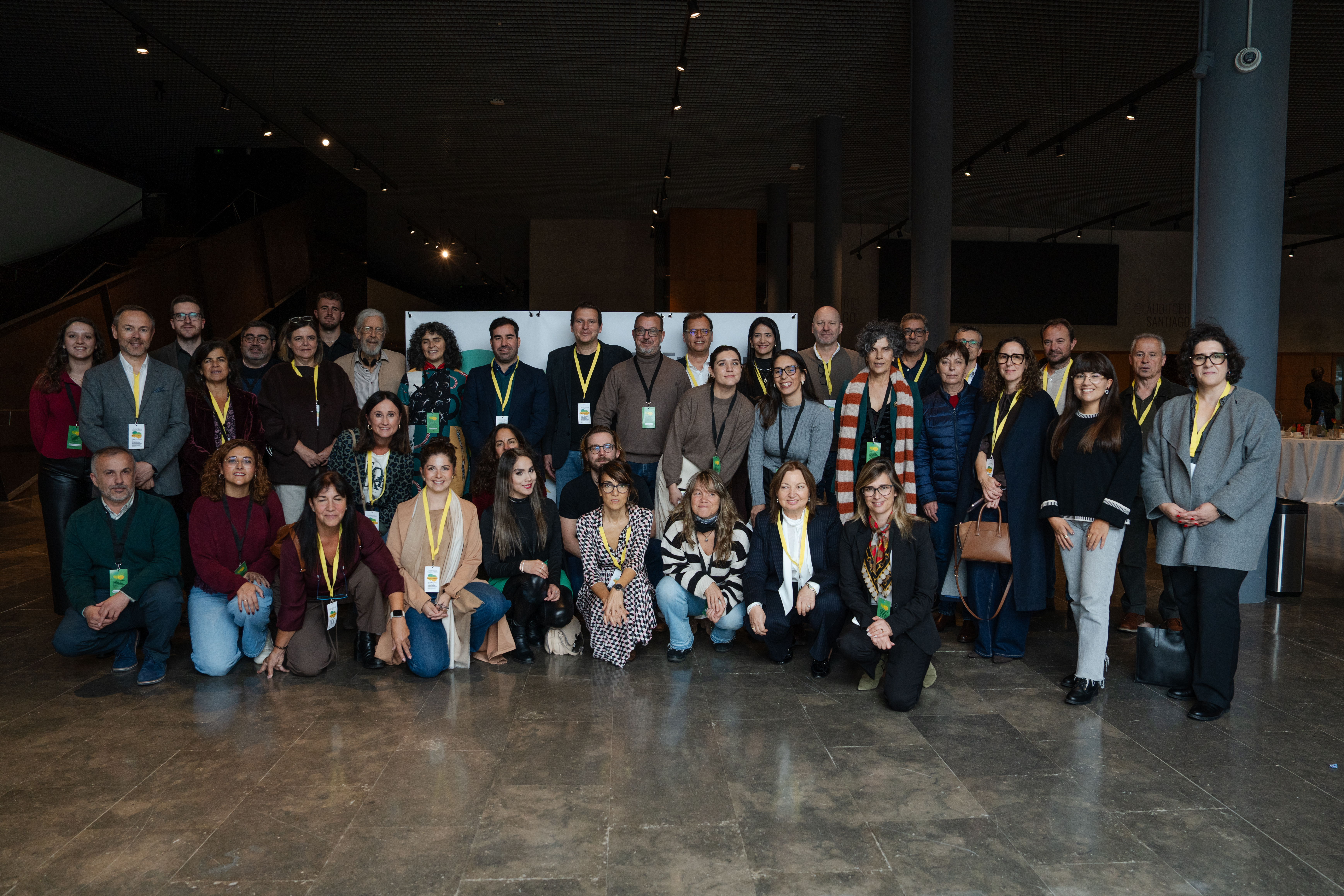
The programme addressed key issues for the future of participatory democracy, including political participation and democratic trust, inclusion and diversity, digital tools, accountability, and the assessment of impact. It also examined how to involve children, young people and other groups traditionally under-represented in public decision-making. Participants explored how participatory budgeting can evolve beyond one-off consultation processes, emphasizing the need for accessible participation, clear follow-up on proposals, transparent implementation, and institutional commitment from local governments.
Adrià Duarte, Coordinator of the OIDP Technical Secretariat, took part in the closing session of the Meeting, highlighting the importance of strengthening international cooperation and exchange spaces to foster mutual learning and advance participatory democracy.
In line with the main discussions throughout the event, his intervention underlined that participatory budgeting remains a key instrument for democratic transformation, improved local governance and citizen mobilisation, as well as an important opportunity for local governments to strengthen their relationship with residents and address current democratic challenges.
He also stressed the importance of embracing an intergenerational perspective, making effective use of digital tools, and addressing the challenges posed by disinformation, fake news and competing narratives that shape public debate and influence citizens' trust in democratic institutions.
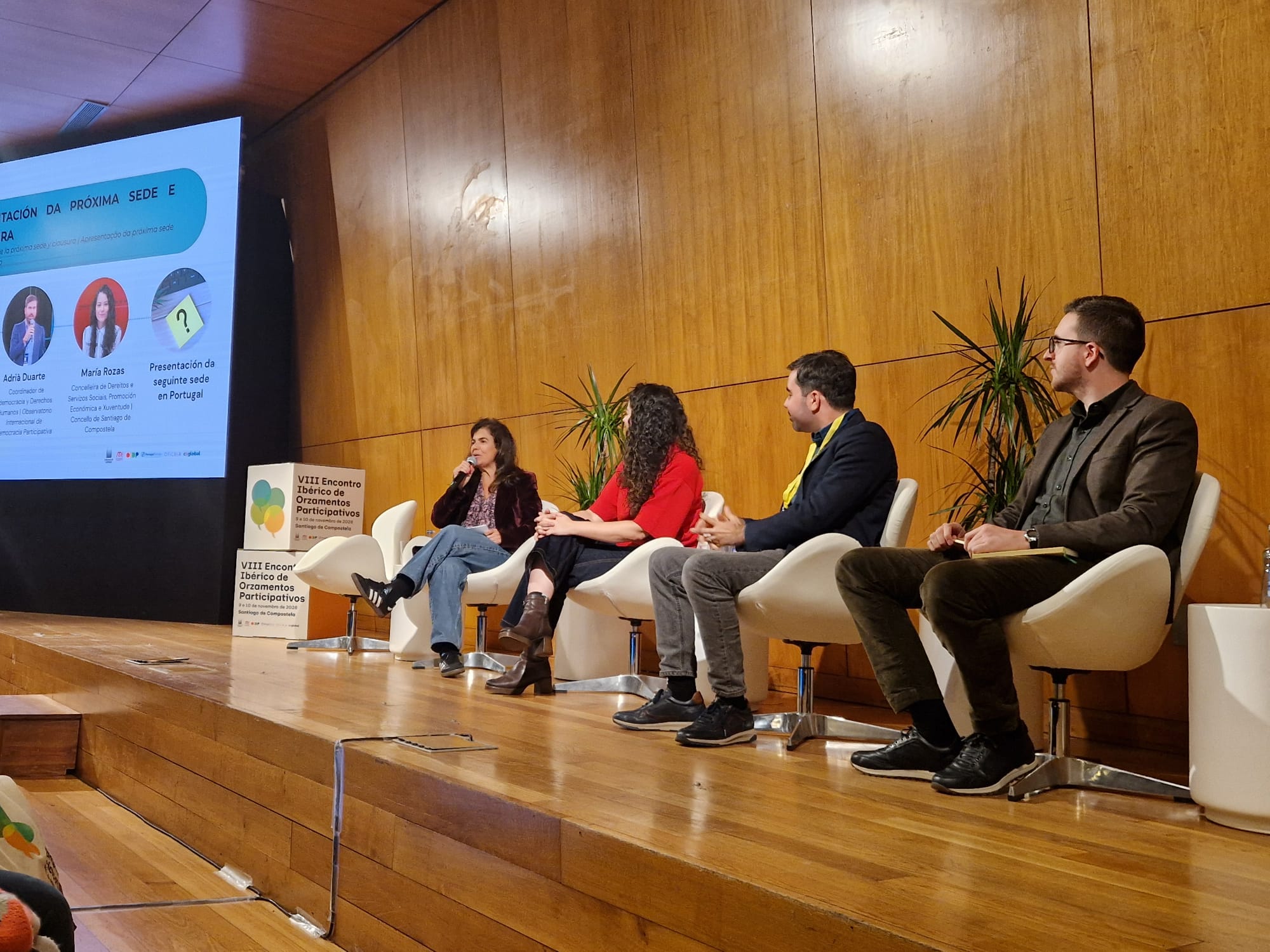
The meeting also counted on the participation of members of the OIDP Advisory Board, including Nelson Dias, Executive Director of Associação Oficina and Coordinator of Rede de Autarquias Participativas, and Giovanni Allegretti, researcher at the Centre for Social Studies of the University of Coimbra and Diana Dajer, member of the Board of People Powered. Their contributions helped frame participatory budgeting within broader debates on democratic innovation and narratives, social justice and institutional change.
OIDP participation in Santiago de Compostela reaffirms its commitment to supporting local and regional governments in deepening participatory democracy. By connecting experiences from across the Iberian Peninsula, the meeting contributed to a shared agenda for making participatory budgeting more inclusive, accountable and transformative.
The OIDP will continue to promote peer learning among its member cities and advocate for participatory processes that produce real influence over public budgets, policies and urban futures.
The 9th edition of the Iberian Meeting will take place in Oeiras, Portugal.



 Join the OIDP
